
Cutting GI and BI ductwork on the fabrication floor
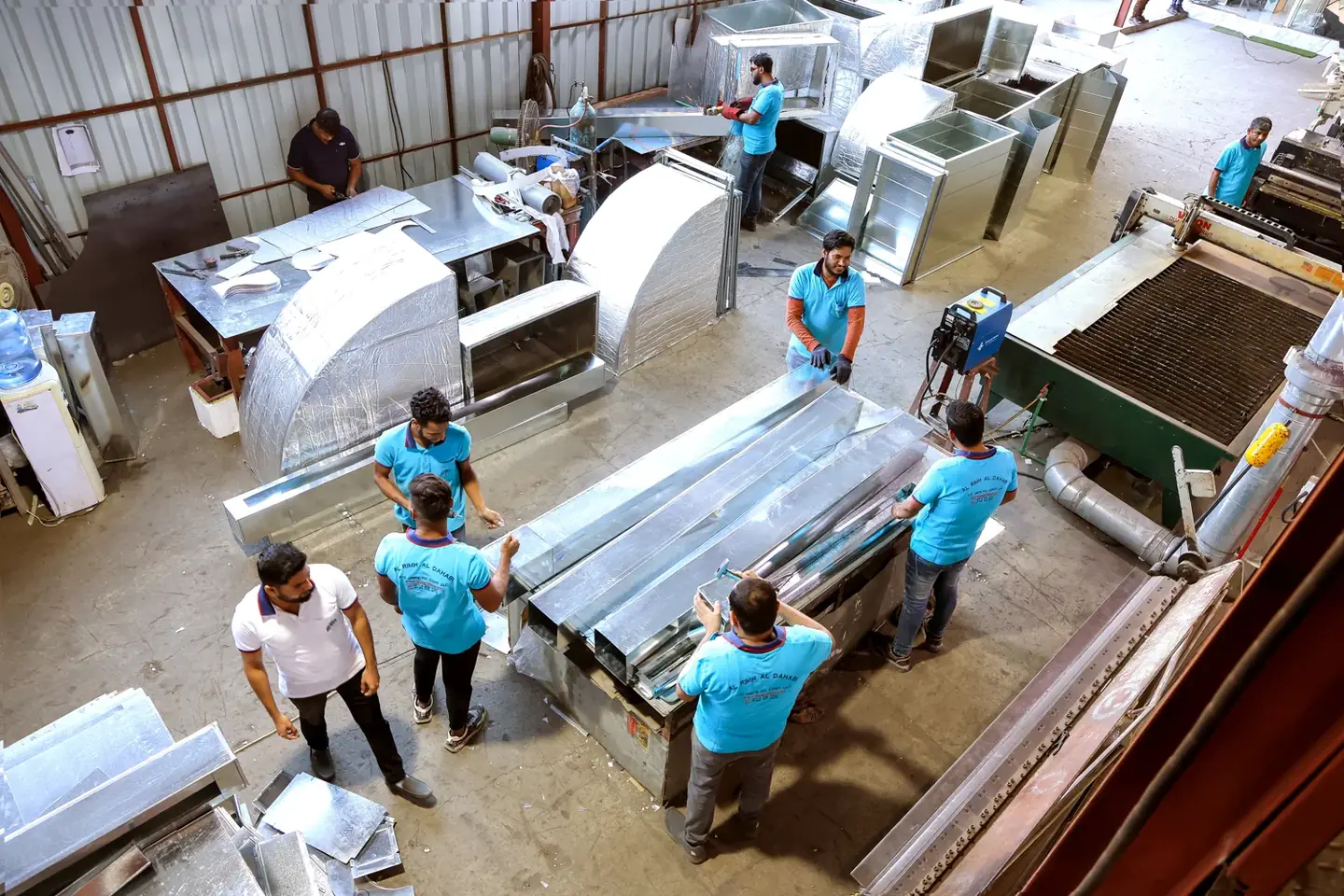
The cutting table turns a flat pattern into the faces of a duct. For galvanised iron (GI) ventilation ducts, the pattern includes material for folds and seams. Black iron (BI) exhaust sections follow the material and joint details specified for the job.
What the blank has to become
A rectangular duct starts as a developed pattern on a sheet. The finished internal width is only one measurement on that pattern. The edge that becomes a seam also takes up material. Before cutting a batch, the fabricator checks the section reference, the direction of the offset and which face will be visible after folding.
Two materials, two work orders
Galvanised steel, commonly called GI on UAE drawings, is used for ventilation ductwork. A kitchen exhaust schedule may call for black steel, identified as BI or mild steel (MS). The sheet thickness, joint design and access details come from the project specification. Keeping the material reference with the cut pieces helps prevent a similar-looking section from entering the wrong assembly.
Discuss your HVAC project